
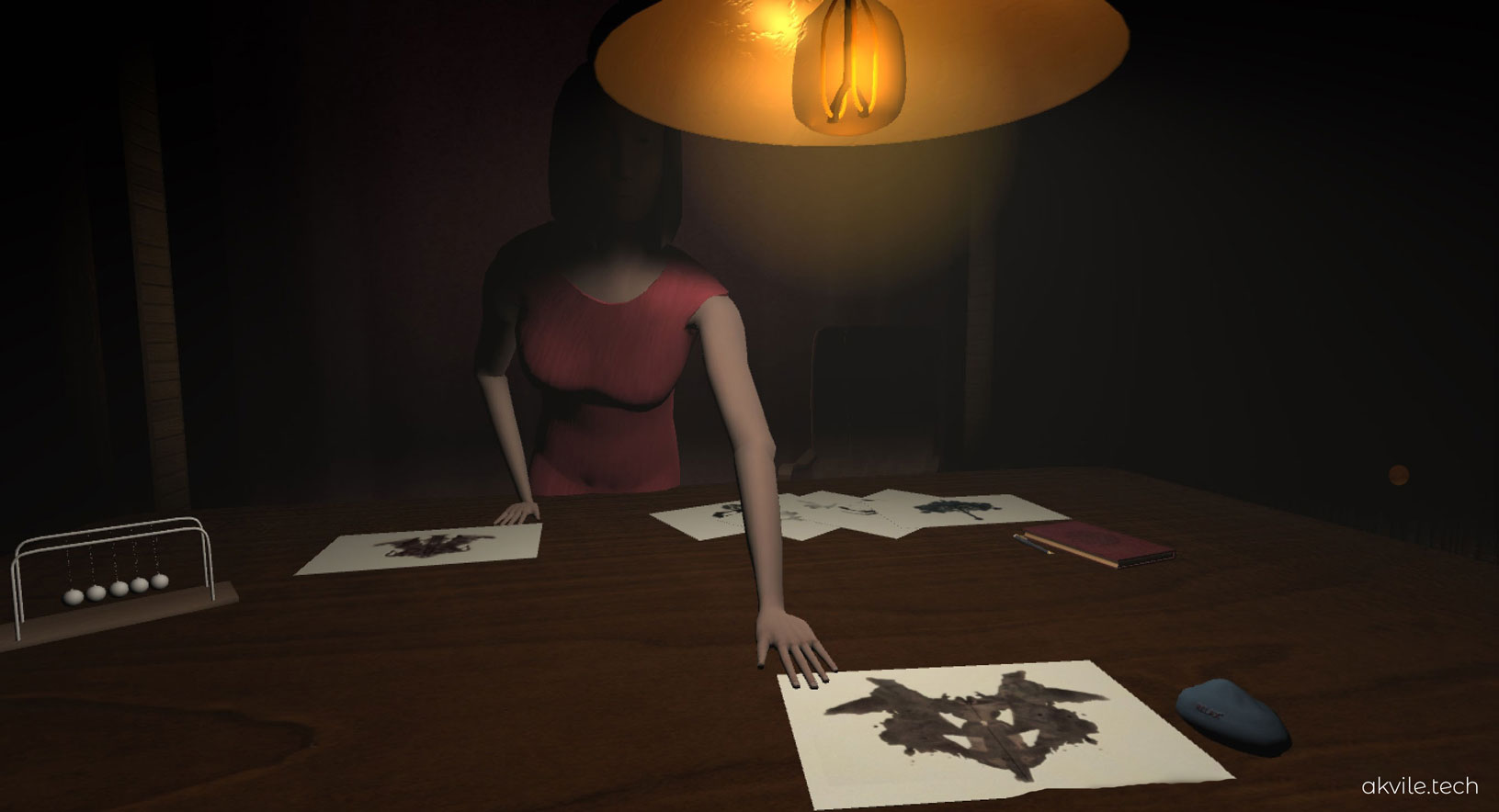
“Psychiatrist appointment” | VR experience | R&D
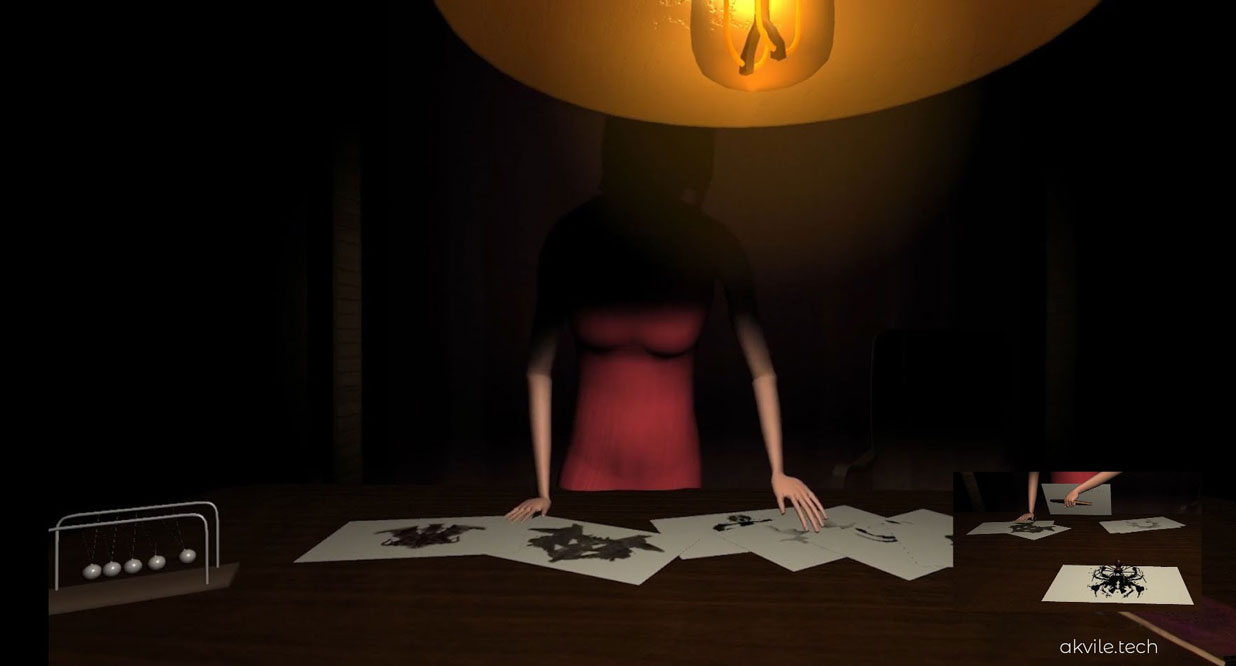
Psychiatrist selecting the Rorschach test picture
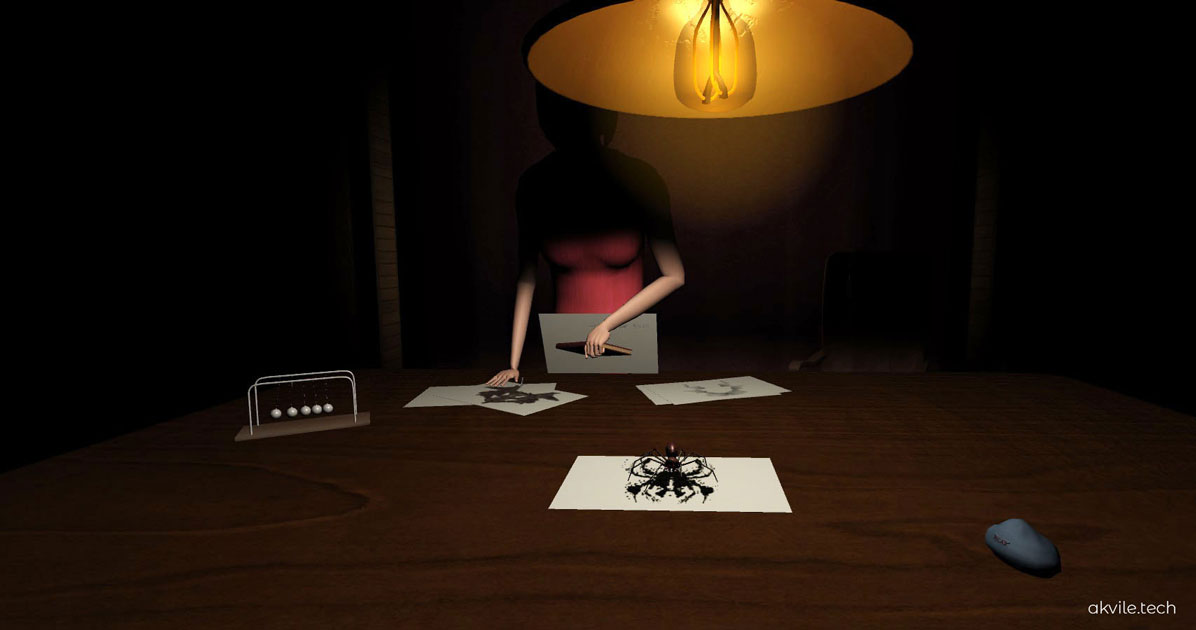
Psychiatrist trying to hit spider with a book
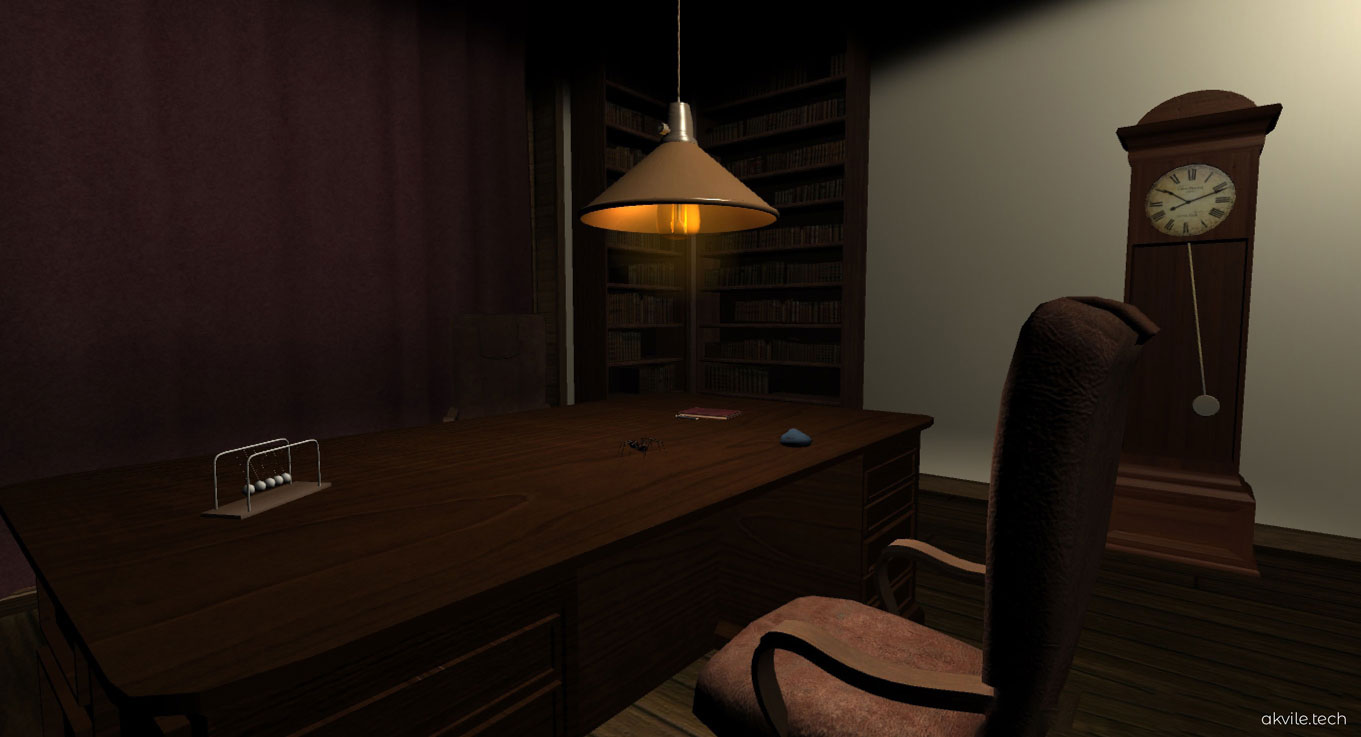
Psychiatrist’s office
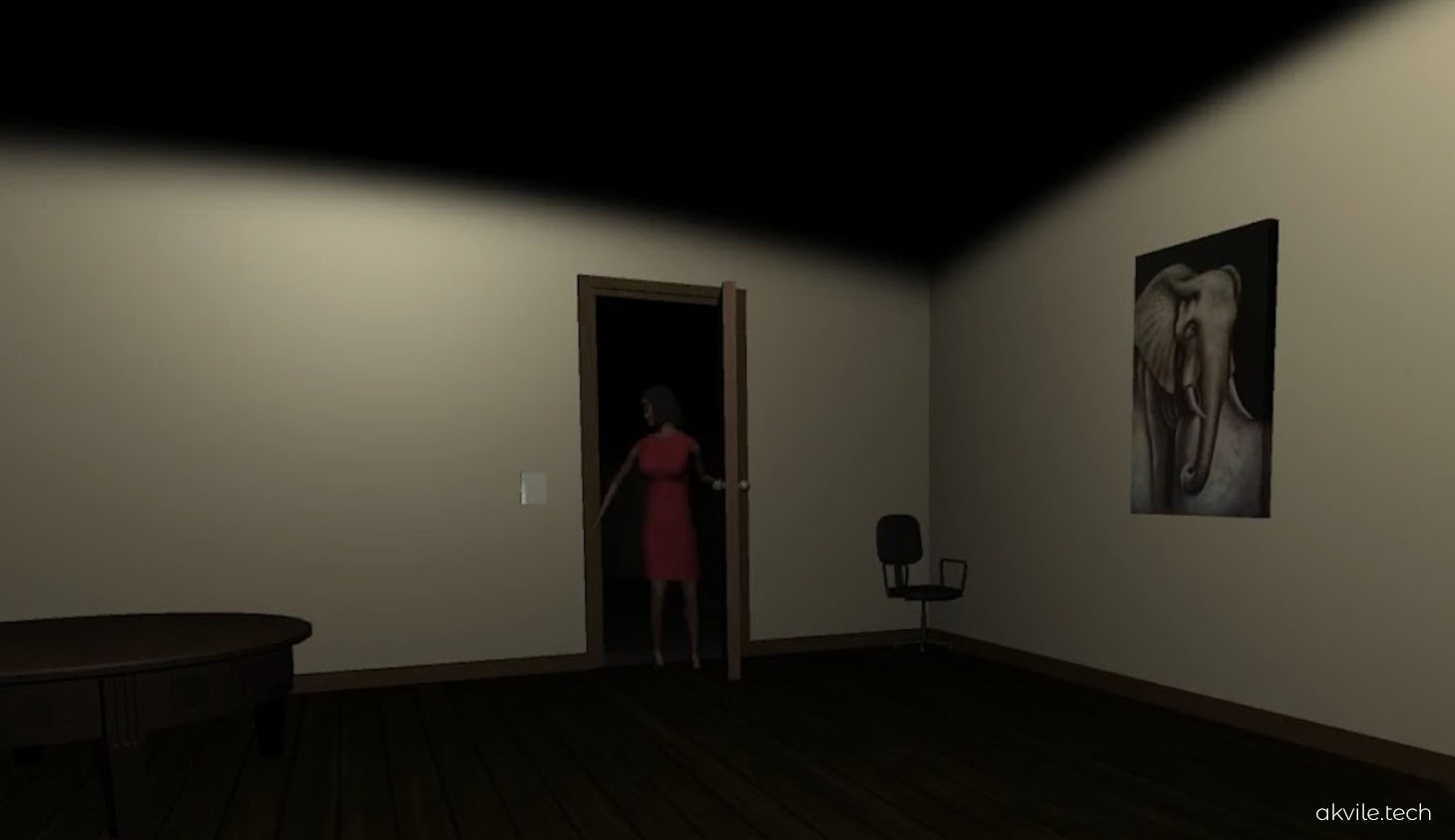
Psychiatrist entering her office
ABOUT
This project was focused on researching whether an addition of passive haptics and atmospheric stimuli to a standard virtual reality (VR) experience could strengthen the impact of a narrative to the user.
To test this hypothesis we have developed VR narrative experience from scratch.
MOTIVATION
Motivation for such project has risen from observing Commercial Multisensory Entertainment trends, which mainly focus on how to simulate realism or synchronize the real with the virtual world, while not focusing on a narrative as a main context.
DEVELOPMENT
It took us around 3 months to develop this VR experience.
Here I will briefly run down through the whole process from initiation to completion:
- Scientific research and state of the art research was carried out to lay down the foundation for the project.
- In parallel, brainstorming the direction of the project.
- Writing several stories, choosing few most appealing ones, combining and finishing the final script for the VR narrative experience.
- Paper sketching the layout of the environment.
- According to the final sketch designing and implementing virtual environment: modeling, texturing and animating assets in Autodesk Maya and Adobe Photoshop, game environment setup in Unity game engine.
- Finalizing the project, carrying several usability tests before the final testing.
- Getting ready for the final testing: experiment design, questionnaire preparation, observational sheet preparation. Test setup: hardware preparation, the whole passive haptic and environmental stimuli setup according to the VR experience.
Scene setup in Maya: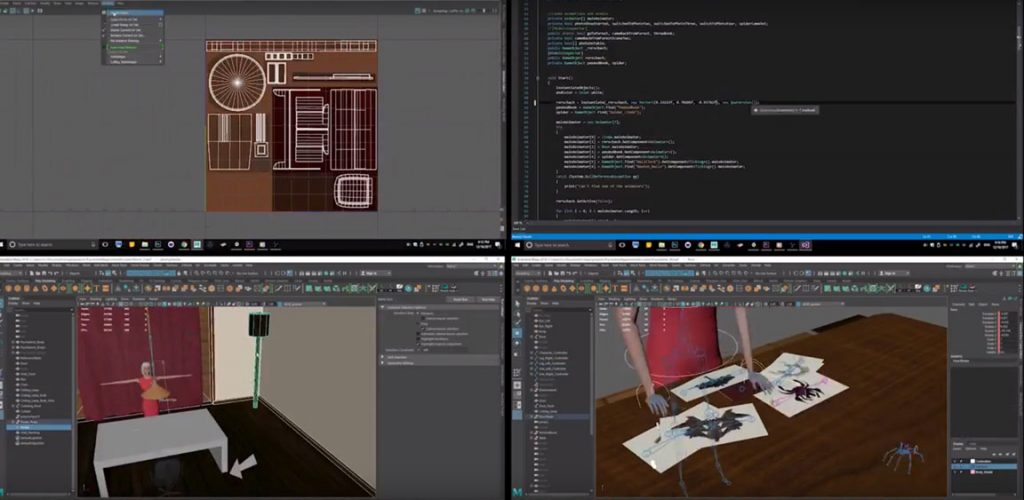
Scene setup in Unity: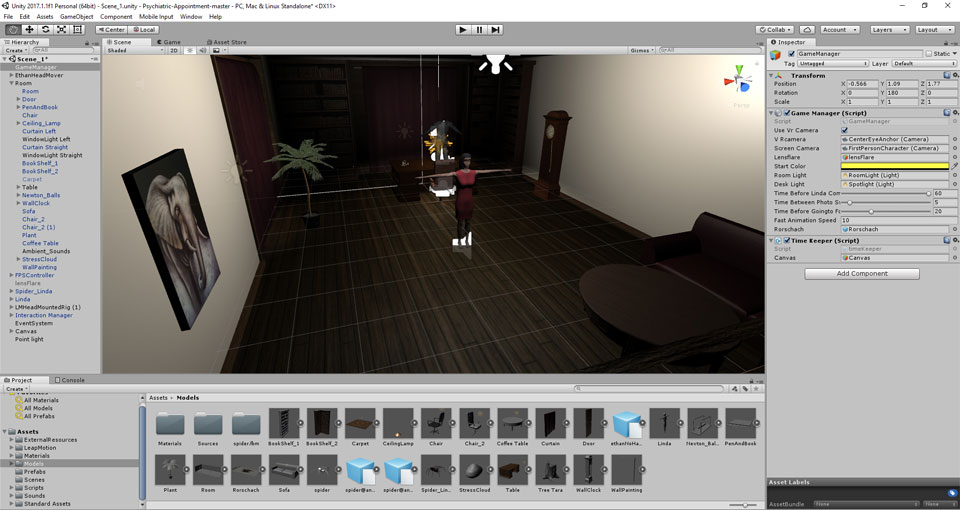
METHODOLOGY
The goal of this research was to evaluate whether the addition of passive haptic sensations and environmental element stimuli affects the suspension of disbelief within a VR narrative.
For the experiment the between subject experimental design has been chosen.
Test participants were divided into a control and an experimental groups, that got different conditions assigned to them. The experimental group was exposed to the VR narrative with passive haptic, as well as environmental elements stimuli. Contrary to it, the control group was submitted to the same VR narrative without any passive haptic or any environmental element stimuli:
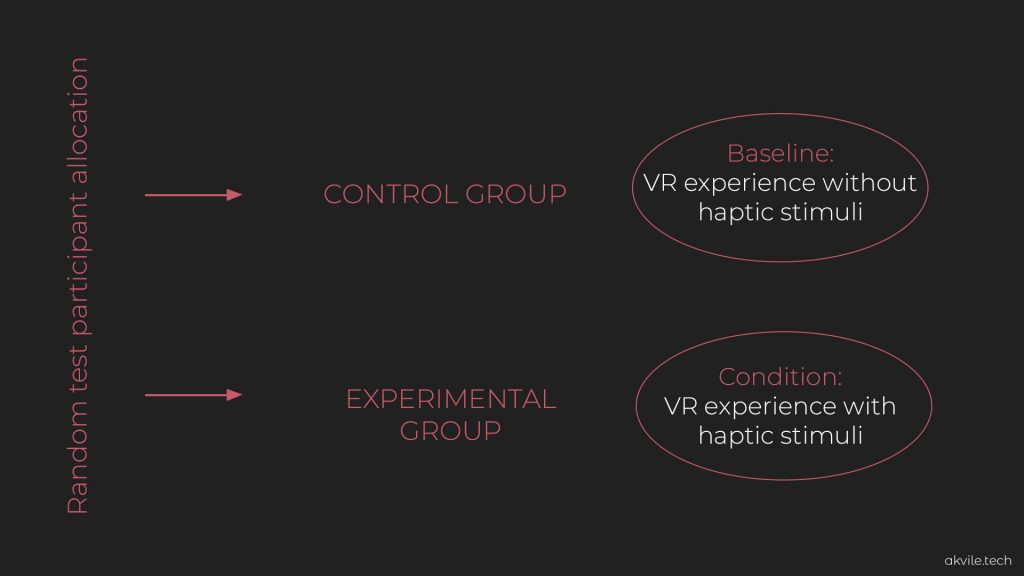
For the experimental group test setup passive haptics and atmosphere stimuli elements such as table, artifact (stress ball), paper, heating lamp and ventilator were used.
All of the real environment elements were calibrated precisely with the virtual environment elements during the testing:
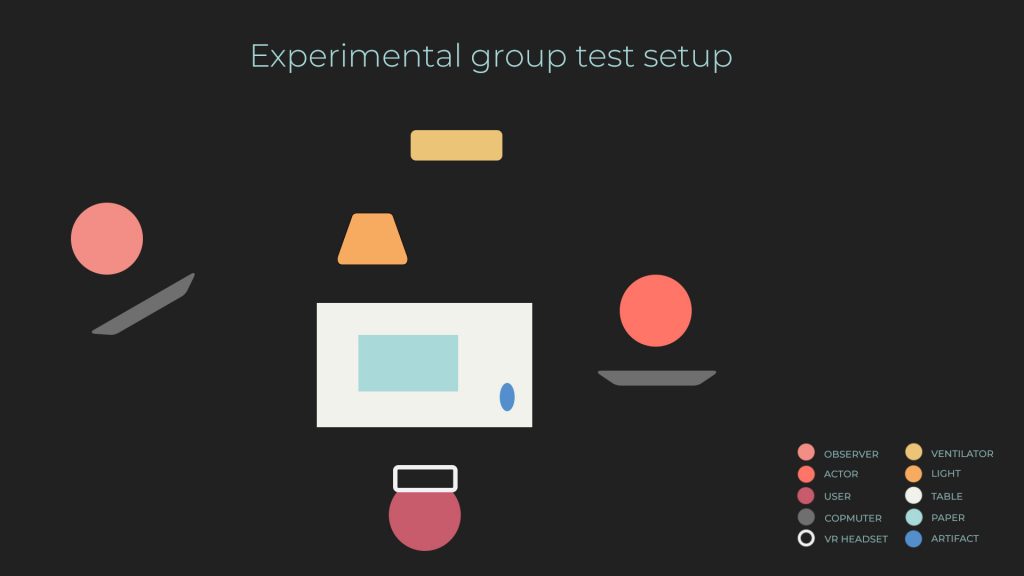
It was chosen to use data source triangulation and derive experimental evidence from three types of data – physiological measurements Heart rate (HR) and Electrodermal activity (EDA), self reported data (questionnaires) and observations.
Psychophysiological measurements from the climax scene were compared with the baseline measurements that were taken in a calm state before the VR experience. The difference was compared between the two experiment groups.
Post questionnaire data helped to understand and compare believability, involvement, usability, enjoinment, quality of different aspects in the narratives and the emotional responses during different phases of the narrative.
In total there were 28 test participants recruited. Each group received 14 randomly assigned test participants.
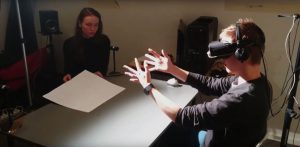
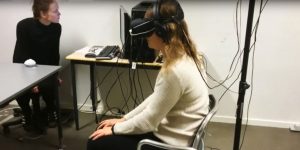
Test participant in the experimental group with haptics on the left picture and test participant in the control group without haptics in the right picture:
RESULTS
The EDA data didn’t show anything significant before or after applying filters to it and was therefore neglected in our comparative calculations.
According to the questionnaire data alone, a tendency of believability and involvement with the story was higher in the experimental test group (with passive haptics and atmospheric stimuli).
However, no significant difference was found between the two groups.
My Role:
Narrative Design,
Script writing,
Directing,
Environment Design,
3D asset modeling and UV’ing,
Scientific Research,
Product Research,
State of the Art Research,
Experiment Design,
Questionnaire Design,
Observational Sheet Design,
User Testing,
Test setup,
Test Moderation,
User Recruitment,
User Interviewing,
Observations,
Qualitative Data Analysis,
Project Management and Coordination
Project Timeline:
September 2017 – January 2018
Where:
Aalborg University Copenhagen
Tools:
Autodesk Maya, Unity 3D, Photoshop, Empatica e4 wristband, HTC Vive, Leap motion
Team:
The whole project – from initiation to completion was made in a group of four people – me and Laurynas Lubys, Christopher Schinkel Carlsen, Anna Lunterova.
Full scientific paper of this project can be found here.