
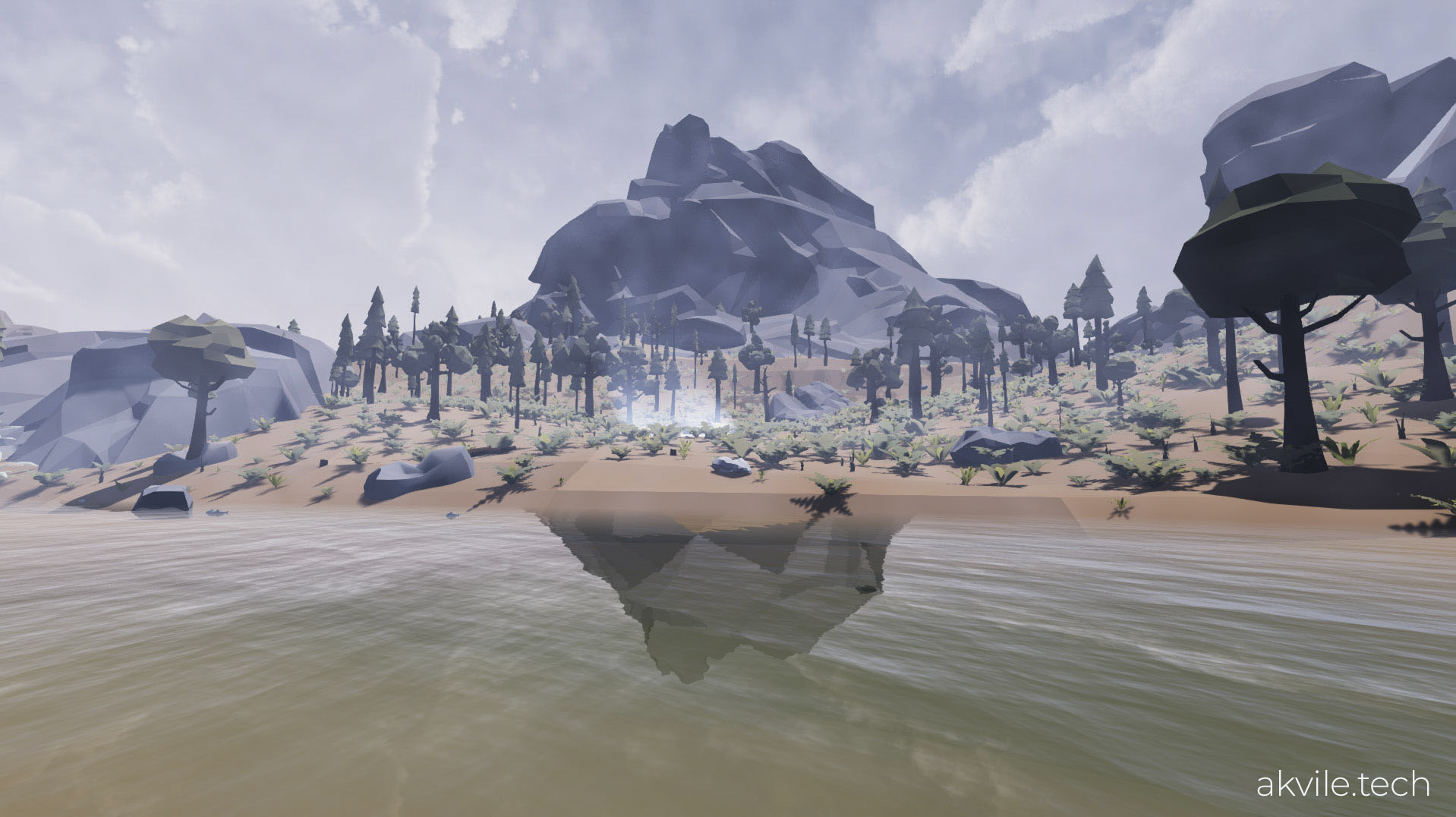
Graphical Style Comparison | Video-game | R&D
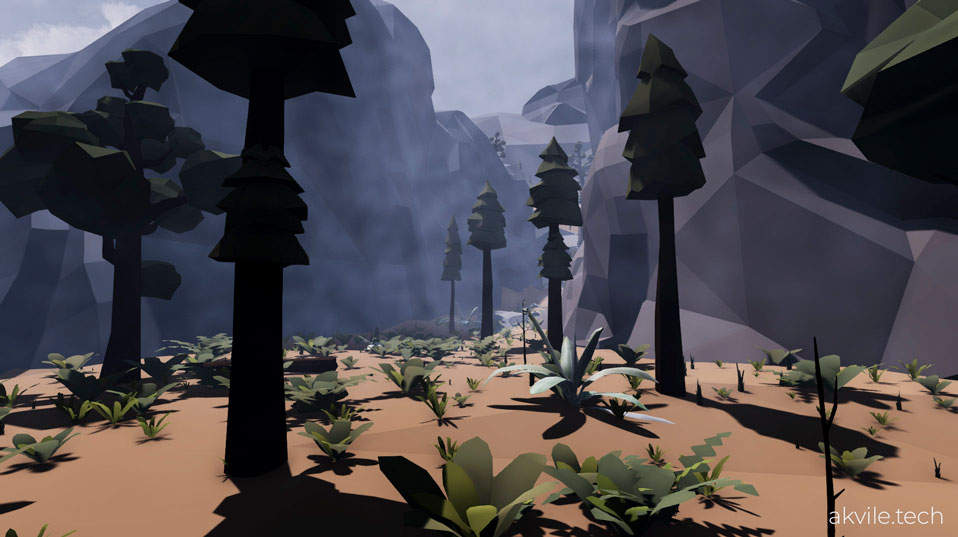
Canyon opening Low Poly style
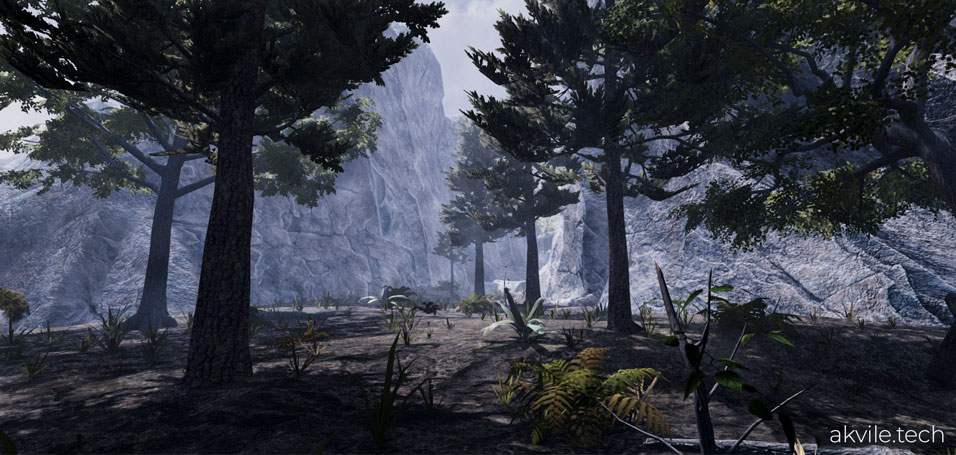
Canyon opening Realistic style
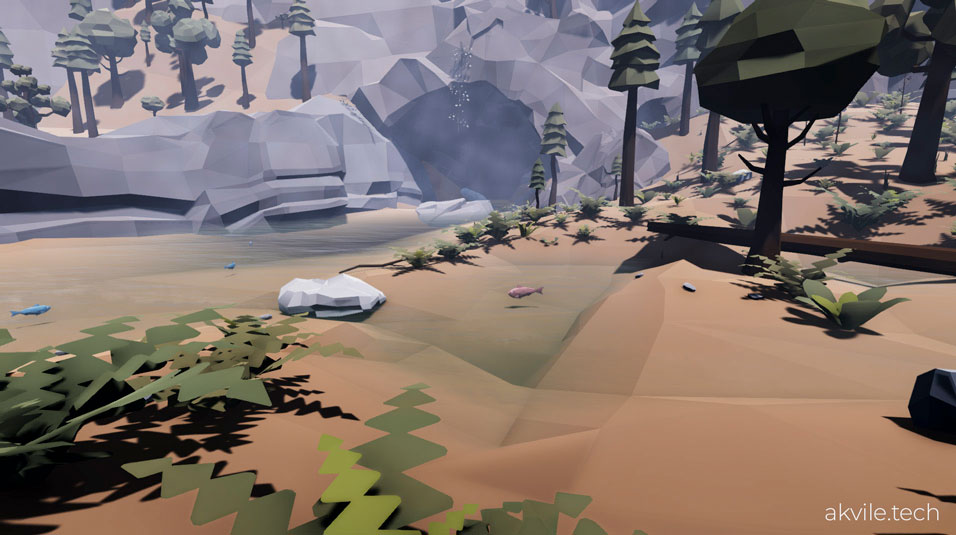
River opening Low Poly style
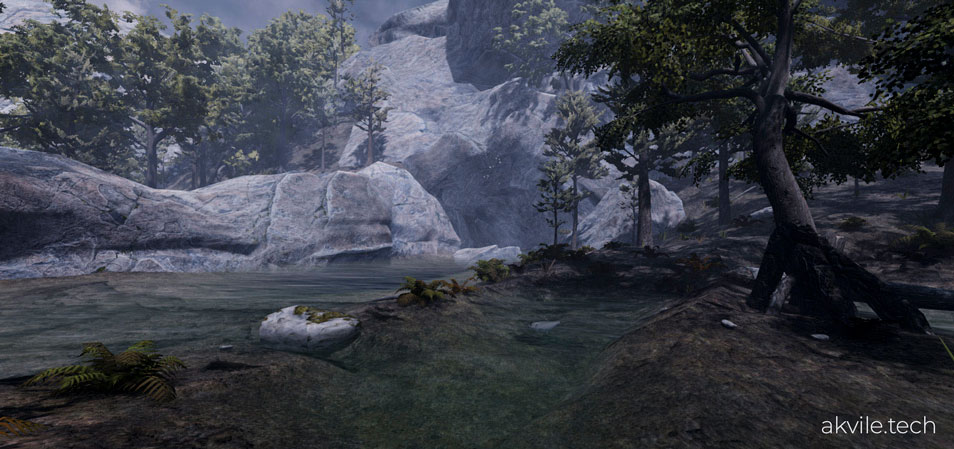
River opening Realistic style
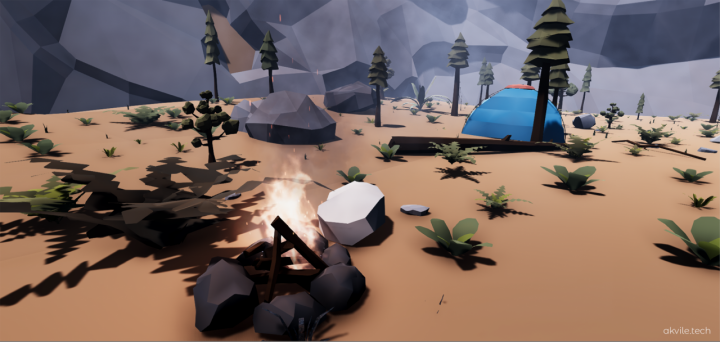
Campsite Low Poly style
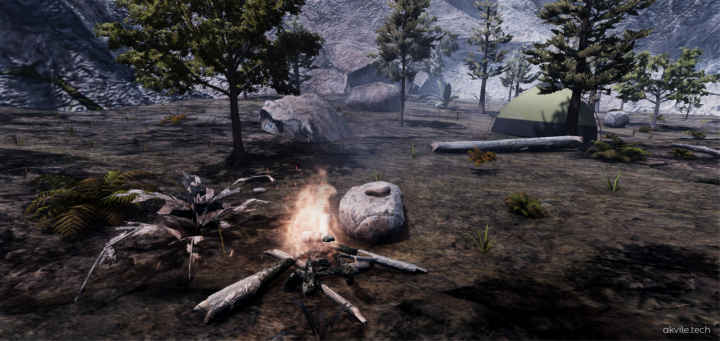
Campsite Realistic style
ABOUT
This project was focused on researching players’ behaviour in video-games and how it changes depending on the graphical style of a video-game environment.
In order to test how a graphical style influences players’ decision making in a video-game experience, the same video-game experience was developed in two different graphical styles – Realistic and Stylized (Low Poly).
MOTIVATION
Motivation to investigate such topic has risen from a lack of research in the field of Game studies regarding players’ decision making in video-games, that is influenced only by graphical styles – Realistic and Stylized.
Moreover we were driven by the passion for video-games and a pursuit of challenge to develop one ourselves!
DEVELOPMENT
The game development took us 3 months of full-time job in total. Here I will briefly run down through the whole process from initiation to completion. Development details and technicalities can be found here.
Development process brief:
- To lay the foundation for the project, scientific research on various theories and state of the art was carried out.
- In parallel, brainstorming on ideas for the narrative and building a mood board for the game environment took place.
- Theories such as Agency, Environmental storytelling, Player attention guidance and Narratology techniques were employed when designing narrative and game environment itself.
- Several game environment map sketches were drawn.
- When the final design of the environment and the narrative was finalized we started implementing the game in two different graphical style from scratch.
- All of the game assets were modeled, textured by ourselves in Autodesk Maya and Adobe Photoshop. Game environment setup and programming for interaction (C#) was done in Unity game engine.
- When the game was finished we have playtested it on 3 users to evaluate the usability: understability, engagement, intuitiveness, etc. After their feedback the game was improved and prepared for the final testing.
- Last step was to get ready for the final testing: experiment design, questionnaires, observational sheet, data log, test setup were planned out, designed and prepared.
Low Poly game asset pack: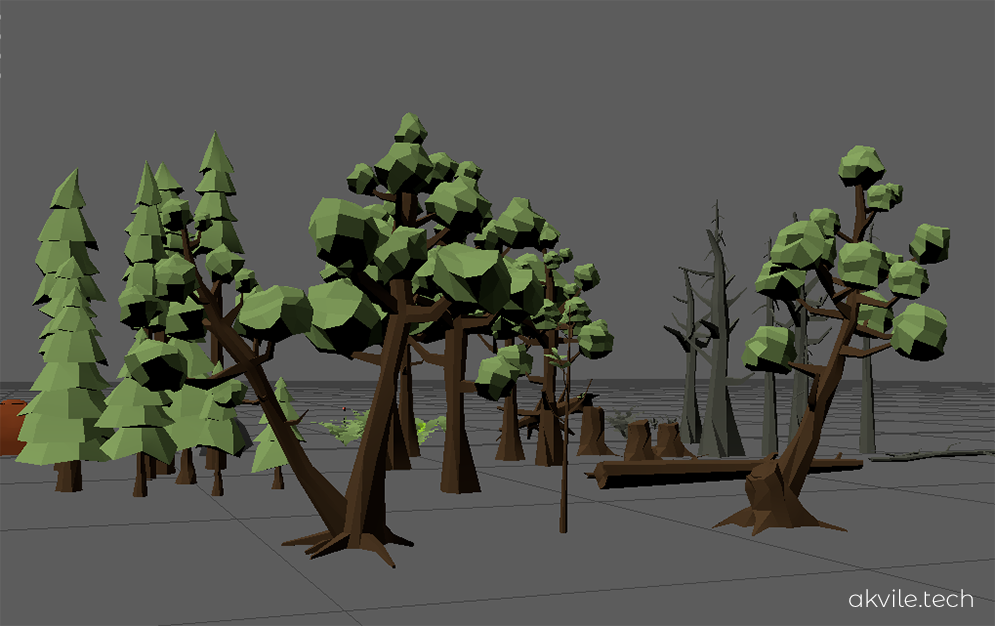
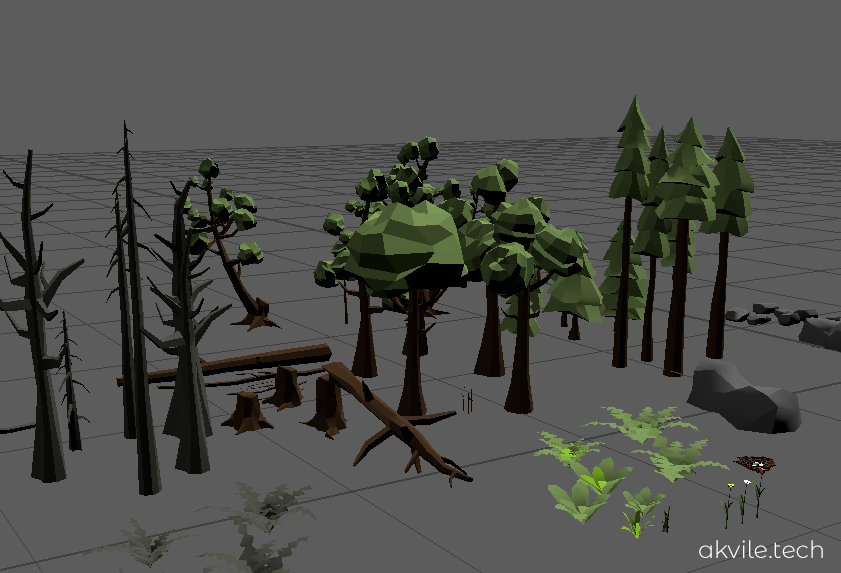
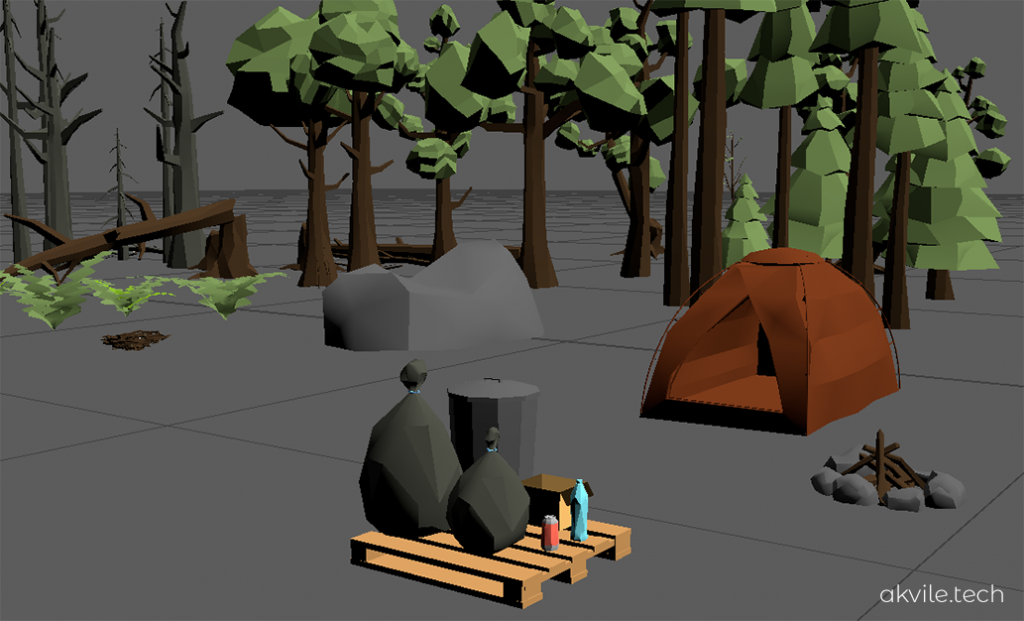
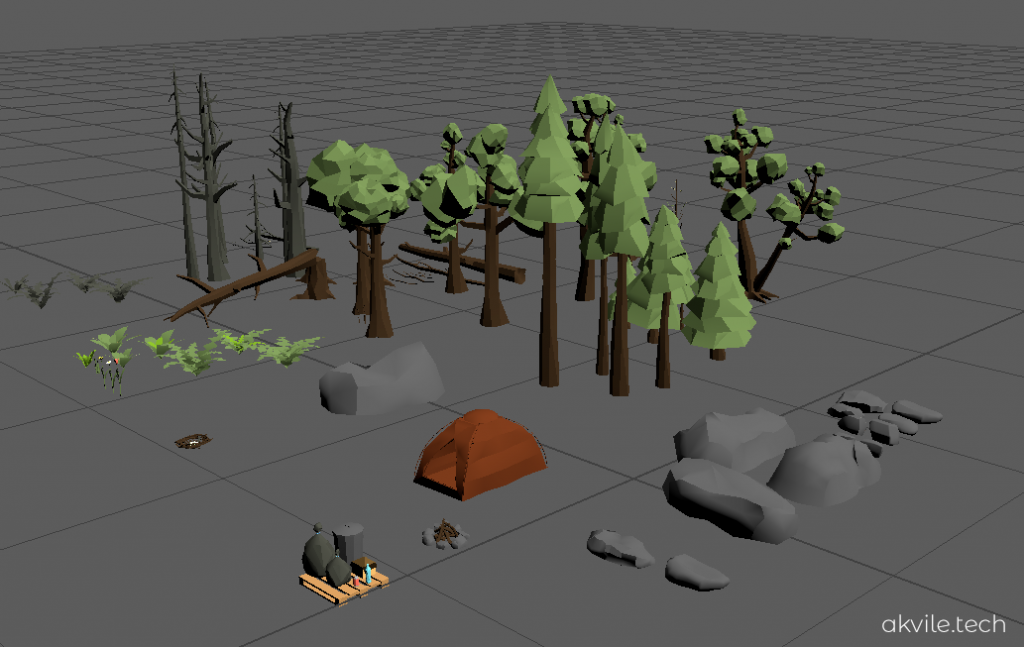
Unity main game level scene: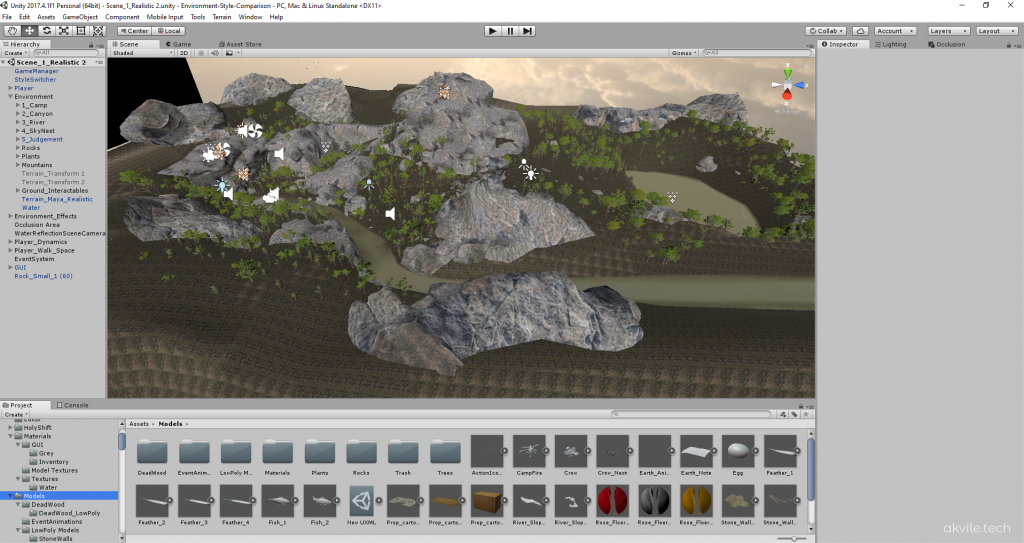
GAME NARRATIVE BRIEF
The character wakes up in a wild nature campsite, far away from civilization and finds a mysterious letter that says he was left alone and is asked to find the One who left him. The character takes off, meanwhile encountering events where he has to make decisions and face that every action has consequences.
The narrative of this video-game experience emphasizes the relationship between humans and nature, by raising the importance of living in peace and balance with it.
Scientific paper that describes the design rationale and implementation process of the narrative can be found here.
METHODOLOGY
The main goal of the test was to find out whether there is a difference in the players’ behaviour, more specifically good (moral) and bad (immoral) decision making between two graphical styles.
For the experiment the Independent measures (or Between groups) design has been chosen.
Experiment group no. 1 was – the video-game experience with the Realistic graphical style and experiment group no. 2 was the Stylized graphical style (Low Poly) of the same game environment: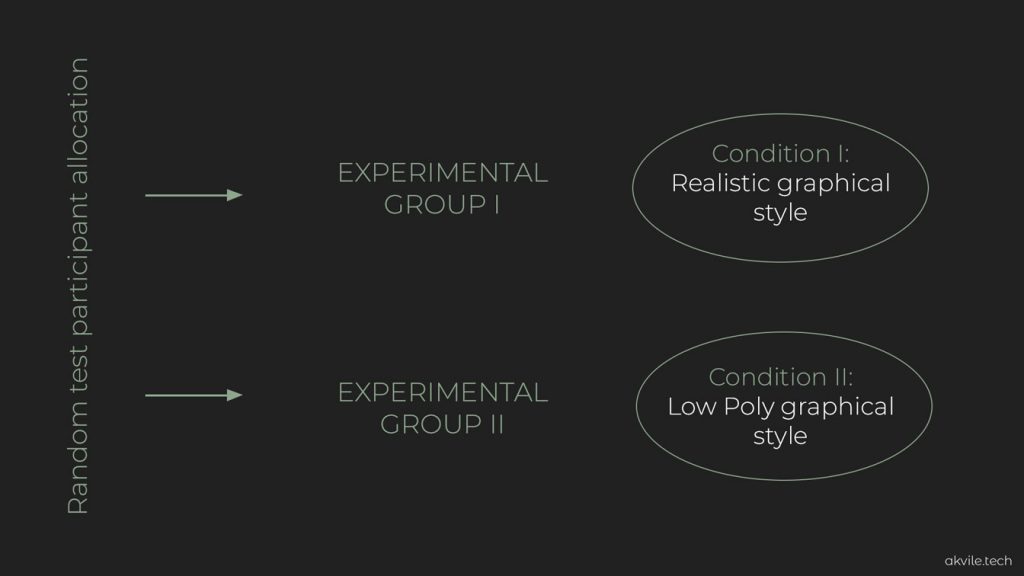
Data was gathered by questionnaires, observations and data log. Three data gathering methods were used to triangulate data and verify the results.
User testing was carried out in Aalborg University Copenhagen, SMILE lab.
In total there were 40 test participants recruited. Each experiment group received 20 randomly assigned test participants.
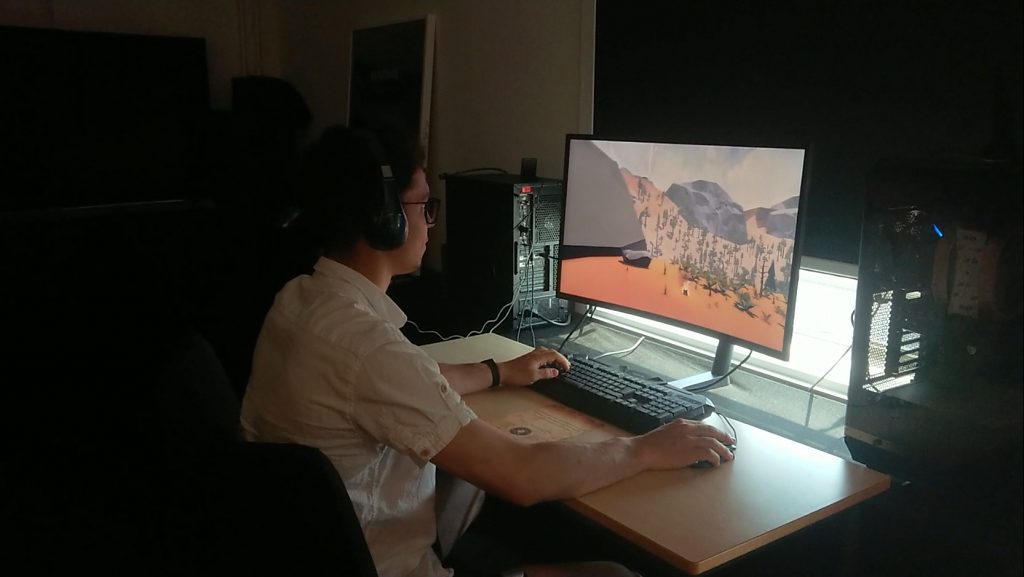
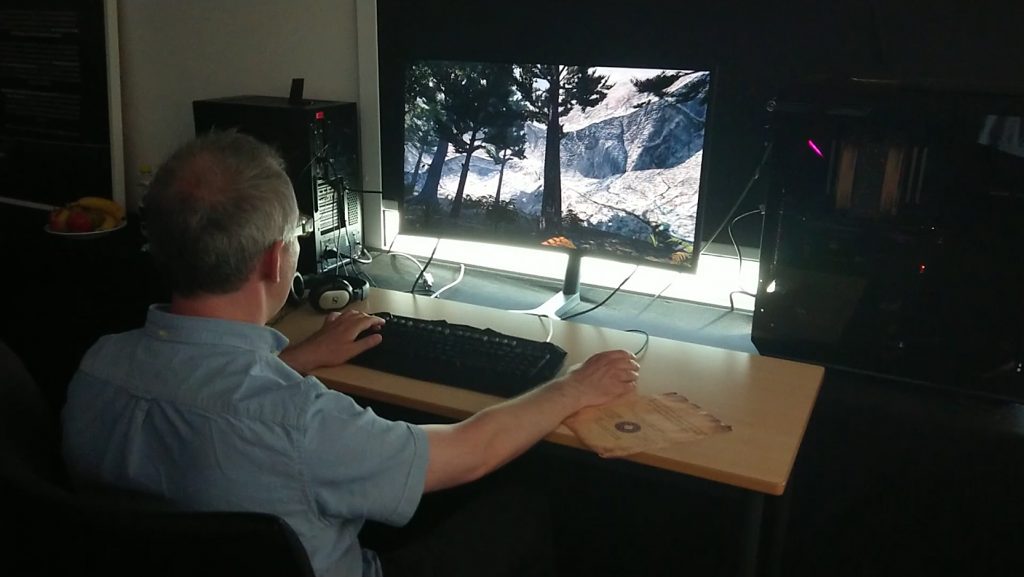
Test procedure went as follows:
Test participants were welcomed into the lab, invited to take a seat in front of the computer and fill out the consent form. When agreed with terms, participants were asked to fill in pre-questionnaire. After they were shortly introduced to the controls for the interactive video-game experience. Before starting the game, participants have received a transmedia note, that was a part of the game’s narrative.
Each participant has randomly received one of the two video-game environments to play: either Realistic graphical style or Stylized (Low Poly) graphical style.
Meanwhile participants were playing, observations were noted on observational sheets and main game events data was logged by the inbuilt game data logger that we created ourselves. After the participants were finished playing they were asked to fill in a post-questionnaire. If needed, the informal user interviews were carried out to supplement already gathered data.
At the end, test participants have received the gratuity.
Statistical tests use for data analysis:
Shapiro–Wilk test, Mann-Whitney U test
RESULTS
Results showed that there is no significant difference between the two different styles, however some tendencies that LowPoly style influences players to do more good decisions were observed.
My Role:
Player Experience Design,
Experiment Design,
Game Design,
Narrative Design,
3D Modeling for Low Poly Environment
Scientific Research,
State of the Art Research,
User Research,
Questionnaire Design,
Observational Sheet Design,
Test Moderation,
User Testing,
User Testing Management and Coordination,
User Recruitment,
User Interviewing,
Test Observation,
Qualitative and Quantitative Data Analysis,
Project Management and Coordination
Project Timeline:
February 2018 – June 2018
Institution:
Aalborg University Copenhagen
Tools:
Autodesk Maya, Unity 3D, Photoshop
Team:
The whole project – from initiation to completion was made in a group of two people, me and Laurynas Lubys.
Full scientific paper of this project can be found here.