
The Emerging Character | Video-game | R&D
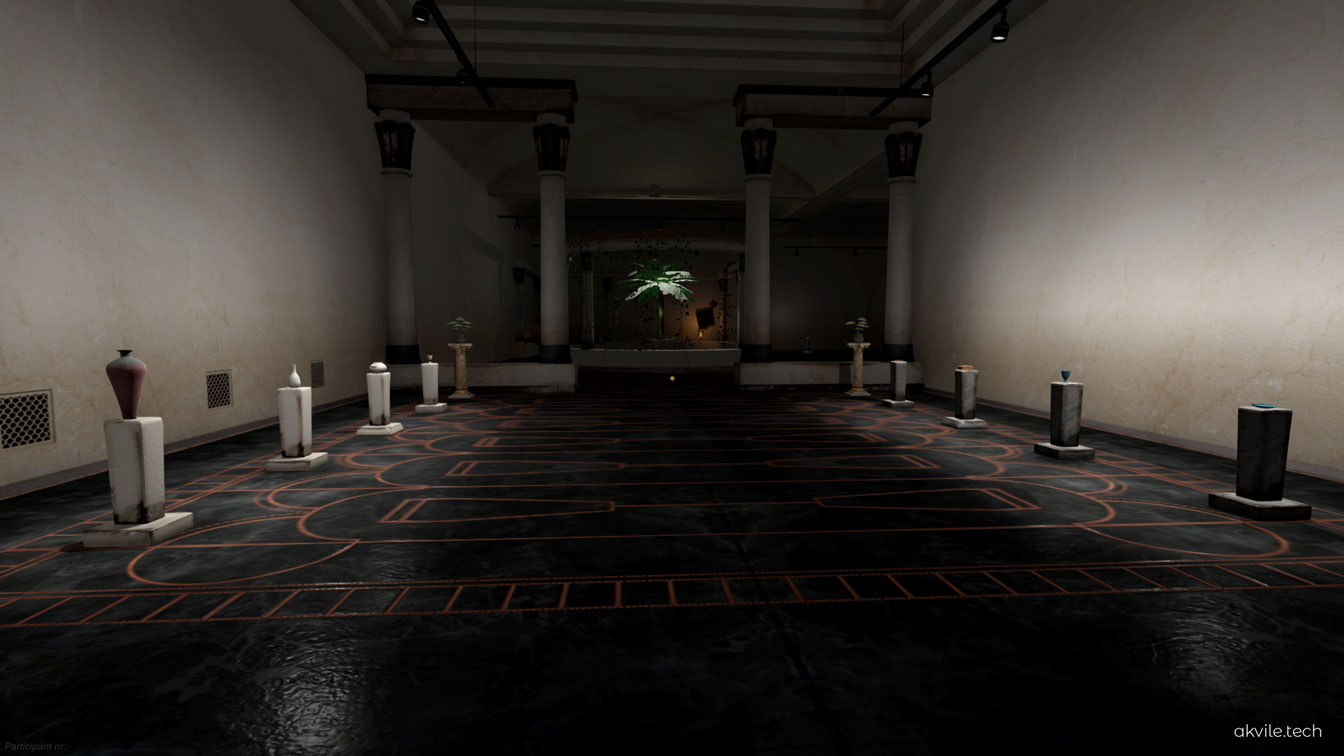
Pottery exhibit hall
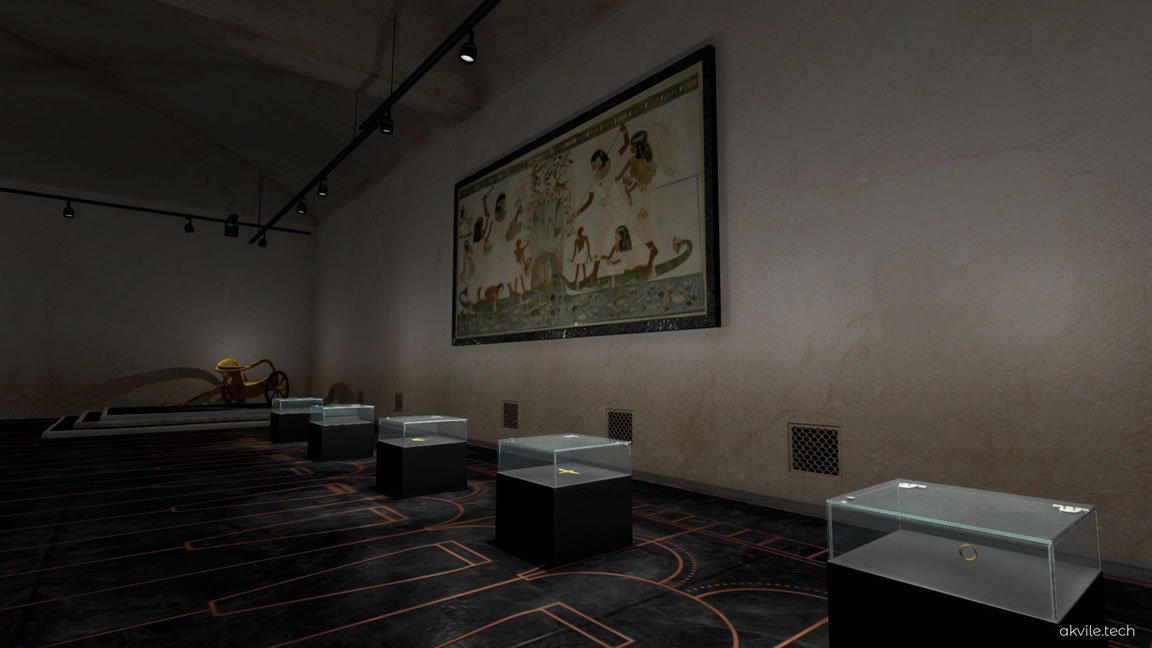
Jewelry exhibit hall
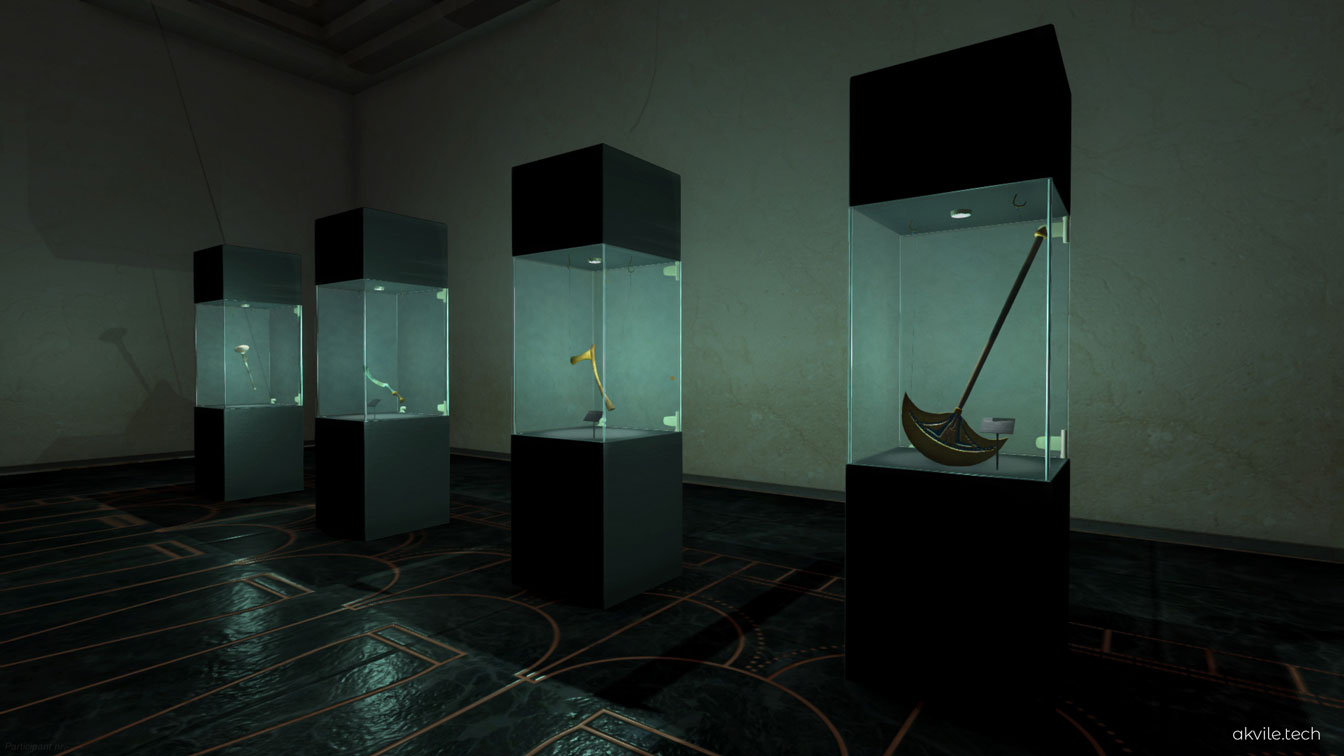
Ancient weapon exhibit hall
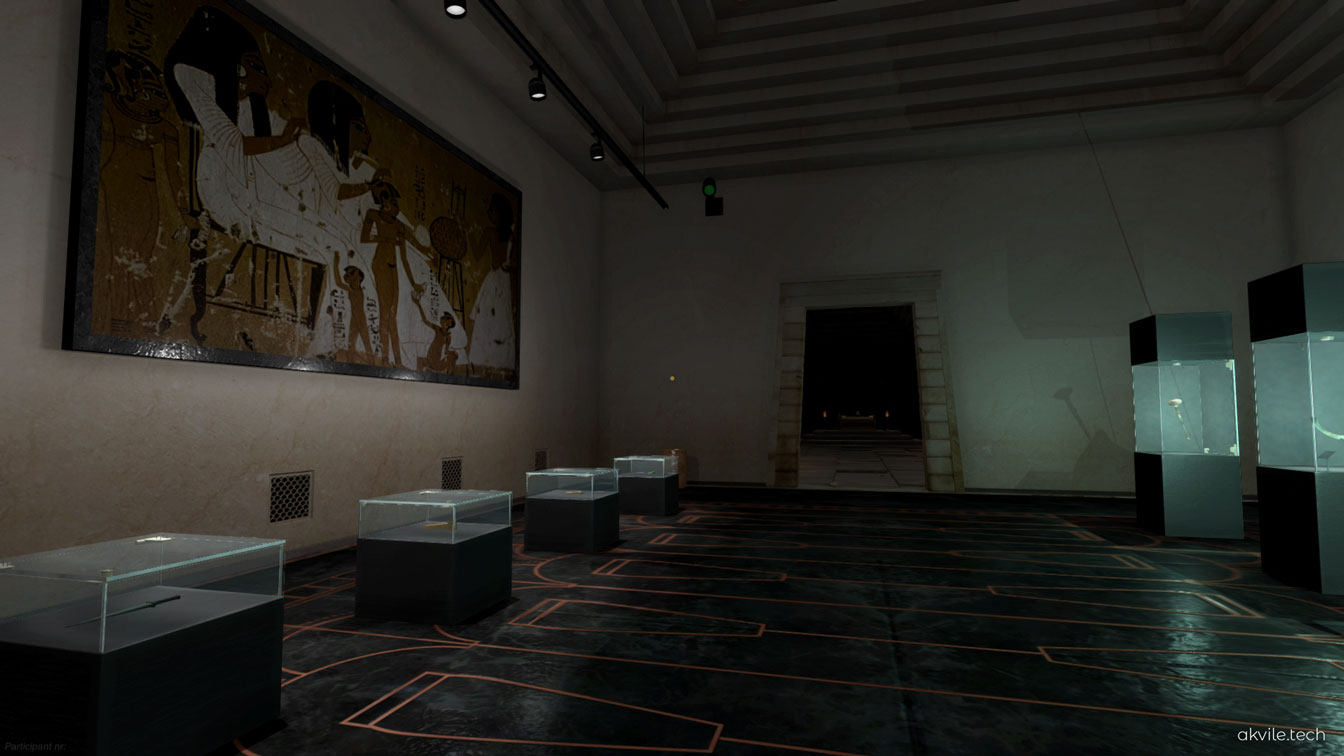
Ancient weapon exhibit hall
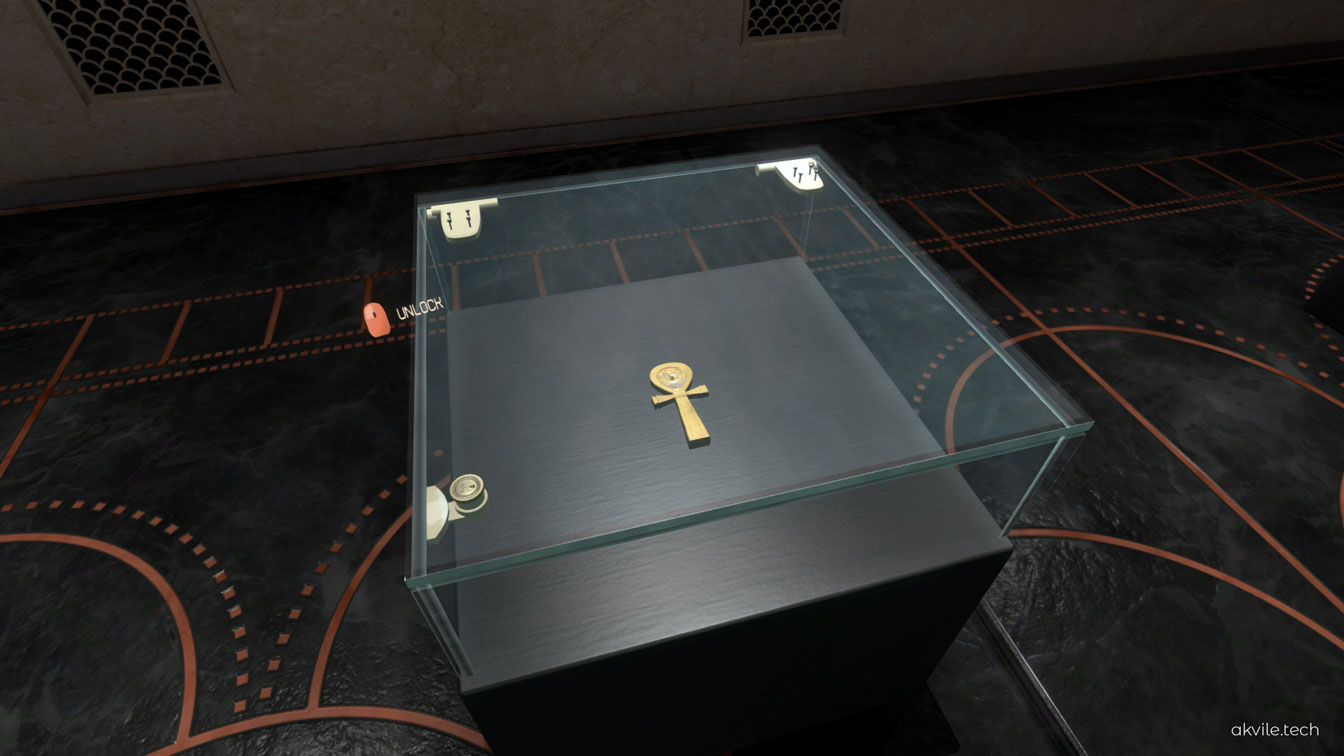
Ancient Egyptian scepter
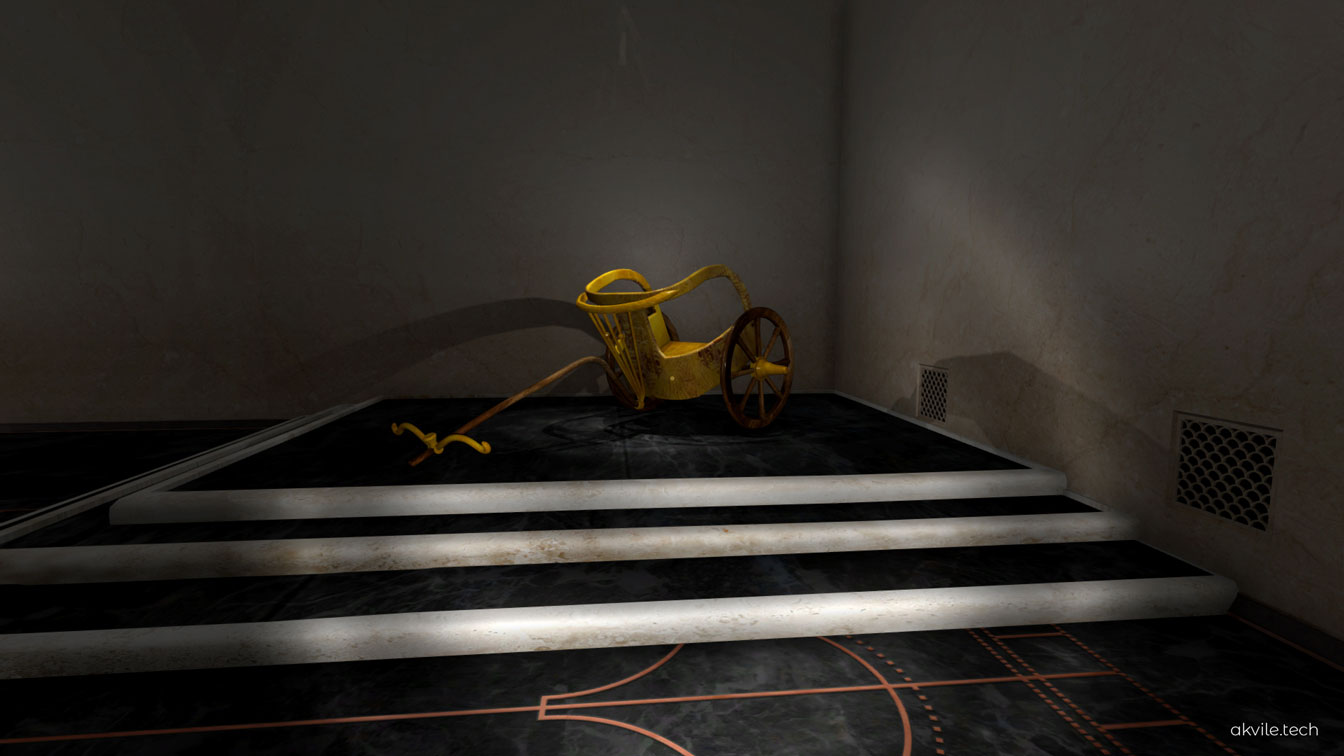
Ancient Egyptian war chariot
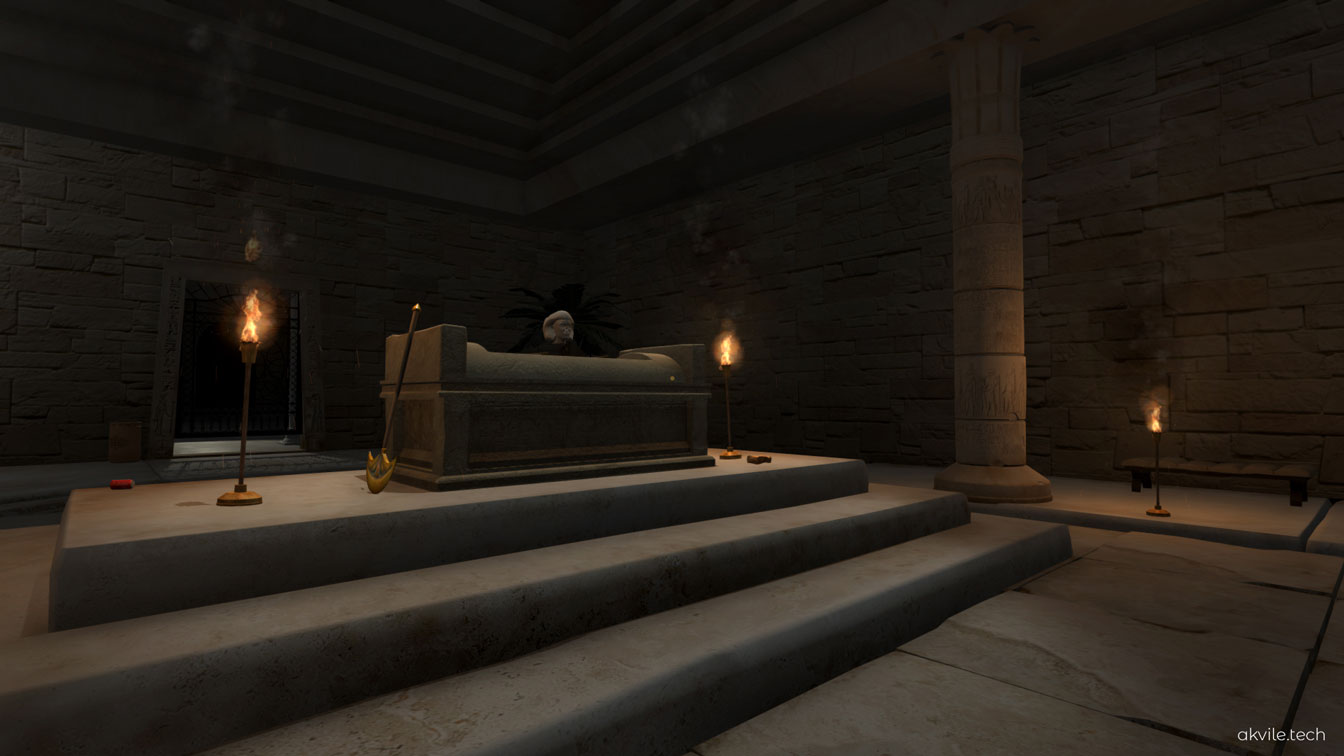
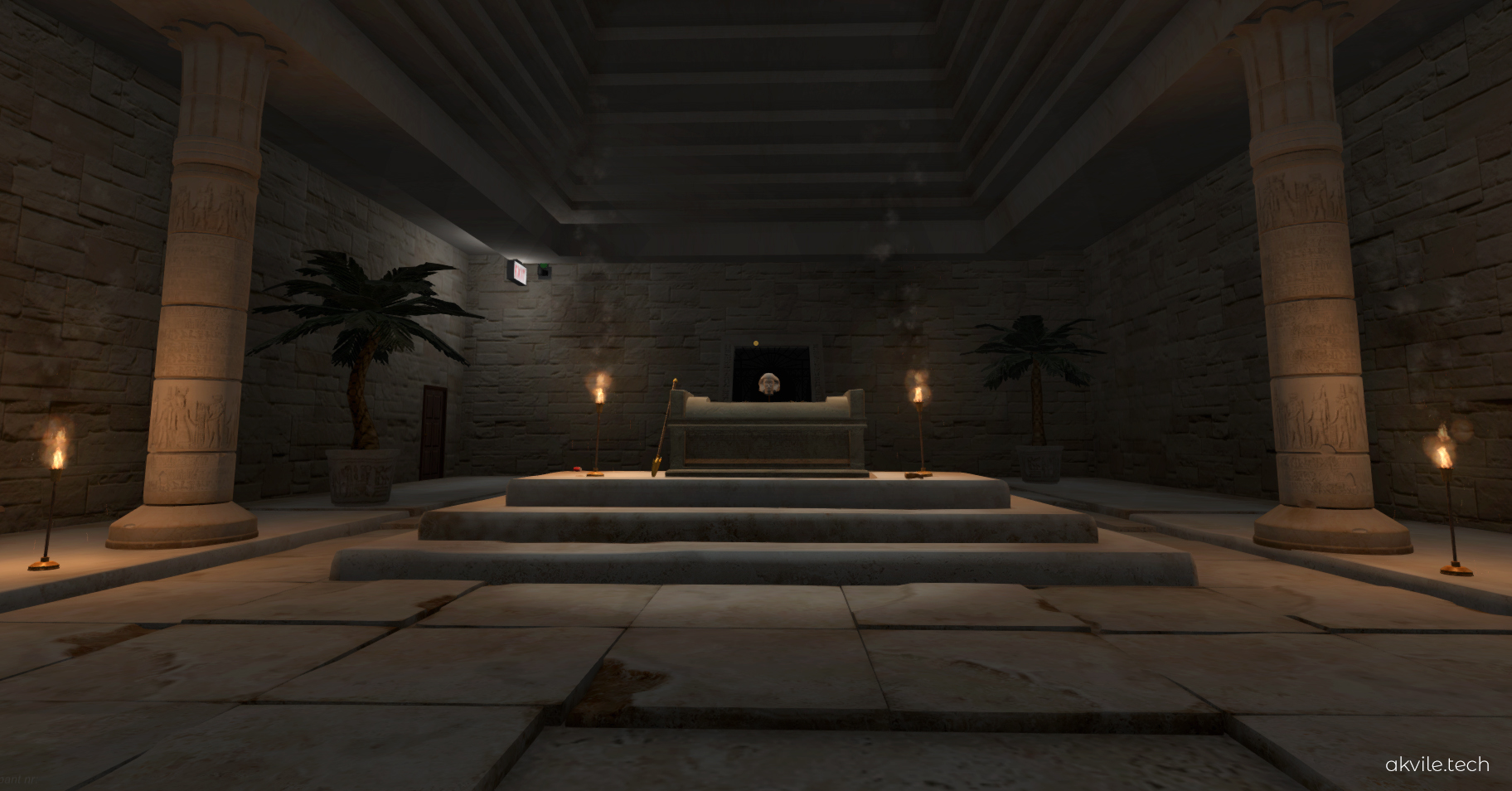
Sarcophagus exhibit hall
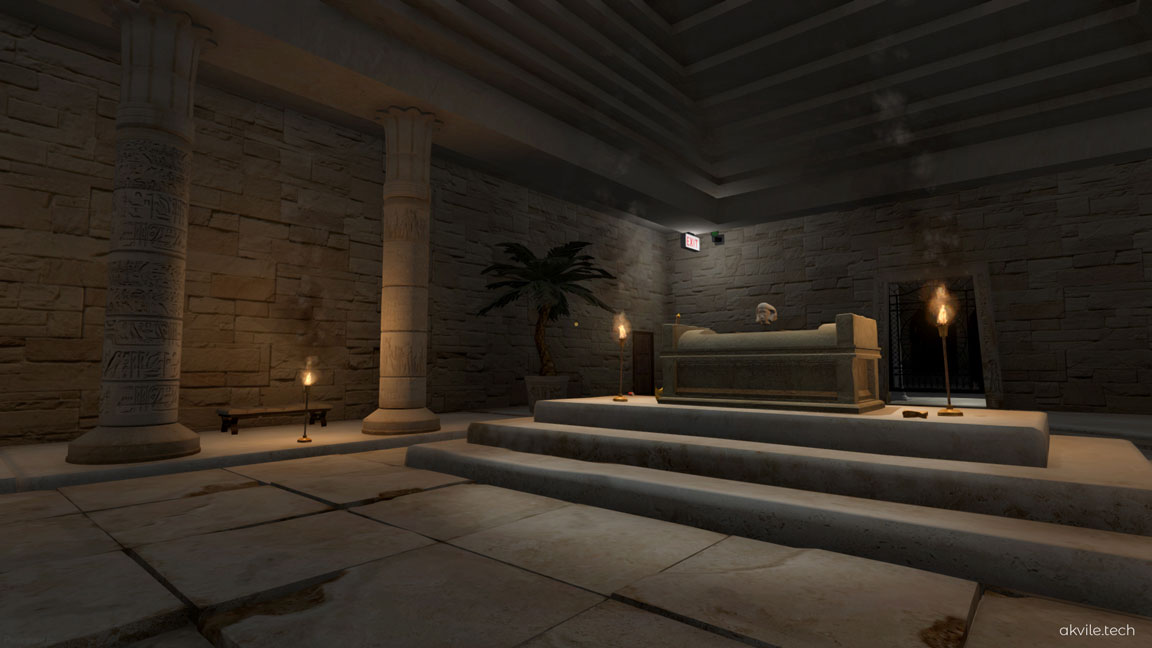
Sarcophagus exhibit hall
ABOUT
With the help of related theories and in depth research we have established the Emerging Character framework.
In order to test how a narrative, presented as an inner thought monologue can affect players to take different actions a video-game environment was developed from scratch.
MOTIVATION
Motivation for this project was two folded – professional/academical drive and personal curiosity:
- While playing games ourselves and researching we have noticed that the same game characters, played by different people are never the same, especially in such games where the system gives more freedom, by allowing players to mentally customize a player-character.
- We have noticed that there is a lack of rounded framework on such phenomena.
- We have noticed that research tendencies are quite one sided, meaning that it focuses more on the direction of player’s influence to the character rather than the opposite.
- Passion and curiosity about video games and their development.
DEVELOPMENT
The game development took us 3.5 months of full-time job in total. Development details and technicalities can be found here.
I will briefly run down through the whole process from initiation to completion:
- To lay the foundation for the project, scientific research on character and related theories as well as state of the art was carried out.
- In parallel, brainstorming on ideas for the narrative, level design and building a mood board for the game environment took place.
- When the storyline was finalized, the main character inner thought monologue was scripted.
- In parallel the level design was finalized.
- Then the game environment implementation process has started: all of the game assets were modeled in Autodesk Maya and textured in Adobe Photoshop, game environment setup and programming for interaction (C#) was done in Unity game engine.
- Most of the sounds we have recorded ourselves with Zoom H1n recorder including Character monologue voice over that was done by Sebastian McAleer Elkjær in a professional sound studio.
- When the game was ready we have playtested it several times on our classmates before the final testing.
- Preparation for the final test: experiment design, questionnaires, observational sheet, data log, test setup were planned out, designed and prepared.
- Iteration process: after the final testing when user data was collected and analysed, some improvements were done upon the user feedback, e.g., increased narrative depth (recorded more Character monologue) and other changes.
- In addition to the final test, after the improvements, the game was tested again on 17 more players.
GAME NARRATIVE BRIEF
In this video-game experience a player is a security guard at the Ramses II museum.
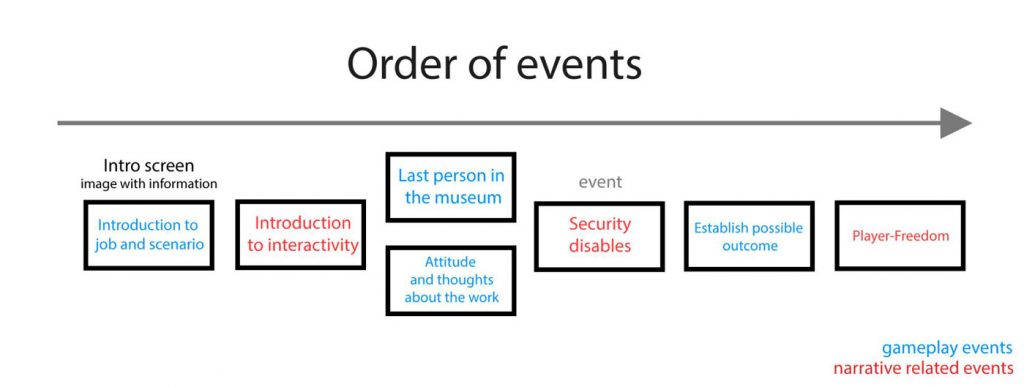
After working overtime a security guard is about to finish work, just before leaving home he must run the final check up to make sure everything is intact, when suddenly the power outage occurs and the whole security system shuts down. From this point the player is given a complete freedom to progress the story as pleased.
The order of ingame events:
METHODOLOGY
Research hypothesis:
H0: Knowledge about the protagonist character’s moral values does not influence the player’s actions;
H1: Knowledge about the protagonist character’s moral values influences the player’s actions.
To test hypotheses it was chosen to perform the independent measures experiment (between groups).
Design of the experiment: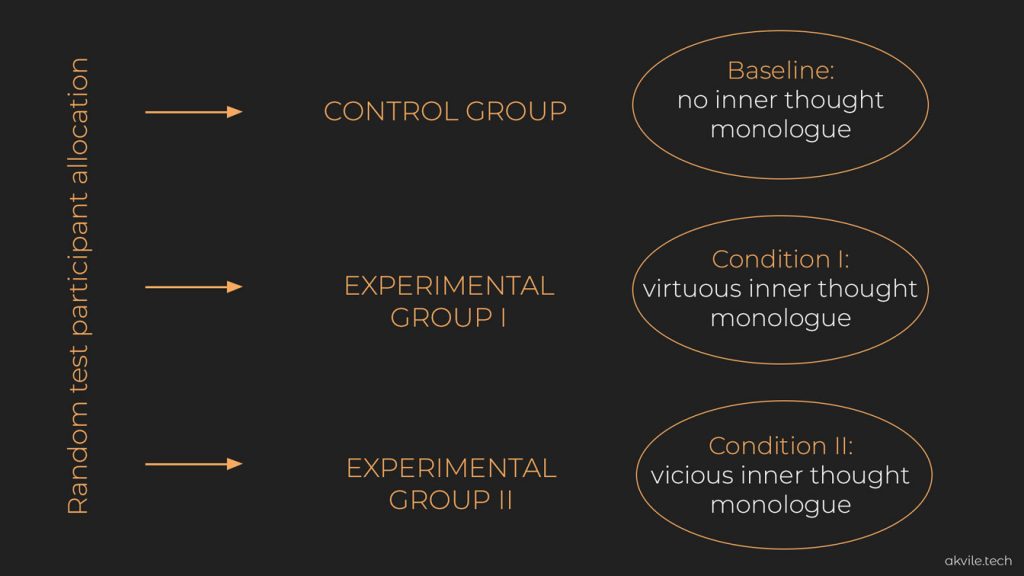
There were 30 participants gathered for the test. Each group consisted of 10 randomly selected participants.
Data was gathered with questionnaires, observations and data logging.
Gathered data was triangulated to verify the results.
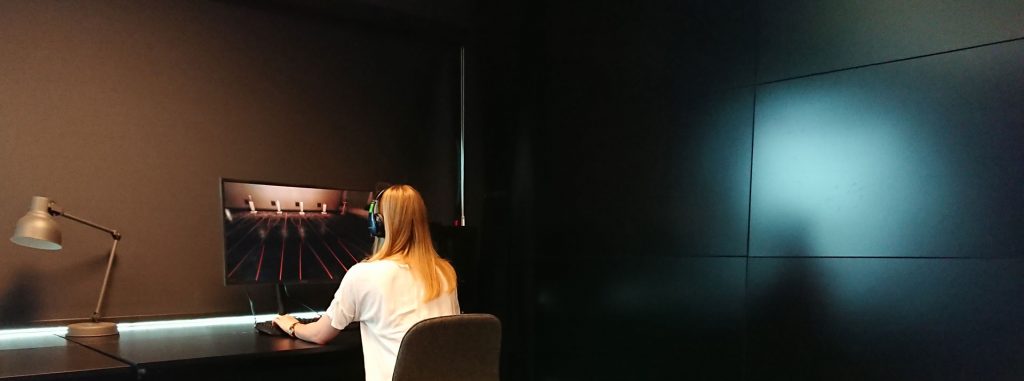
User testing was carried out in Aalborg University Copenhagen, SMILE lab.
Test procedure went as follows:
Firstly, test participants had to fill out the consent form. When agreed with terms, participants were shortly and unbiasedly introduced to the test as well as controls for the interactive digital storytelling experience.
Each participant has randomly received one of the three groups: either with virtuous or vicious character inner thoughts (voice over) or without any inner thoughts.
Meanwhile participants were playing, observations were noted on observational sheets and main game events data was logged by the inbuilt game data logger that we created ourselves. After the participants were finished playing they were asked to fill in a questionnaire. At the end, if needed, the informal user interviews were carried out to supplement already gathered data.
Statistical tests used:
Mann-Whitney U test
RESULTS
The overall test results show that a knowledge of character’s moral values have an influence on player’s actions.
The primary findings show that the vicious character’s inner thoughts can influence players to behave more vicious (steal more), while the virtuous character influences to behave more virtuous (steal less).
Some additional test data gathered in order to find out what influenced decision making more – the narrative or interactivity, shows that interactivity has influenced players’ actions more than a narrative.
My Role:
Player Experience Design,
Game Design,
Level Design,
Narrative Design,
Character monologue scripting,
Environment Design,
3D game asset modeling,
UV’ mapping,
Texturing,
Scientific Research,
Product Research,
User Research,
State of the Art Research,
Experiment Design,
Questionnaire Design,
Observational Sheet Design,
Test Moderation,
User Testing,
User Testing Management and Coordination,
User Recruitment,
User Interviewing,
Observations,
Qualitative and Quantitative Data Analysis,
Project Management and Coordination
Project Timeline:
February 2019 – June 2019
Institution:
Aalborg University Copenhagen
Tools:
Autodesk Maya, Unity 3D, Photoshop, Zoom H1n
Team:
The whole project – from initiation to completion was made in a group of two people, me and Laurynas Lubys.
Full scientific paper of this project can be found here.